Isophoric News · Tuesday, November 3, 2026
Satellite survey of 465 large cities finds land sinking worldwide, fastest in parts of Mexico City
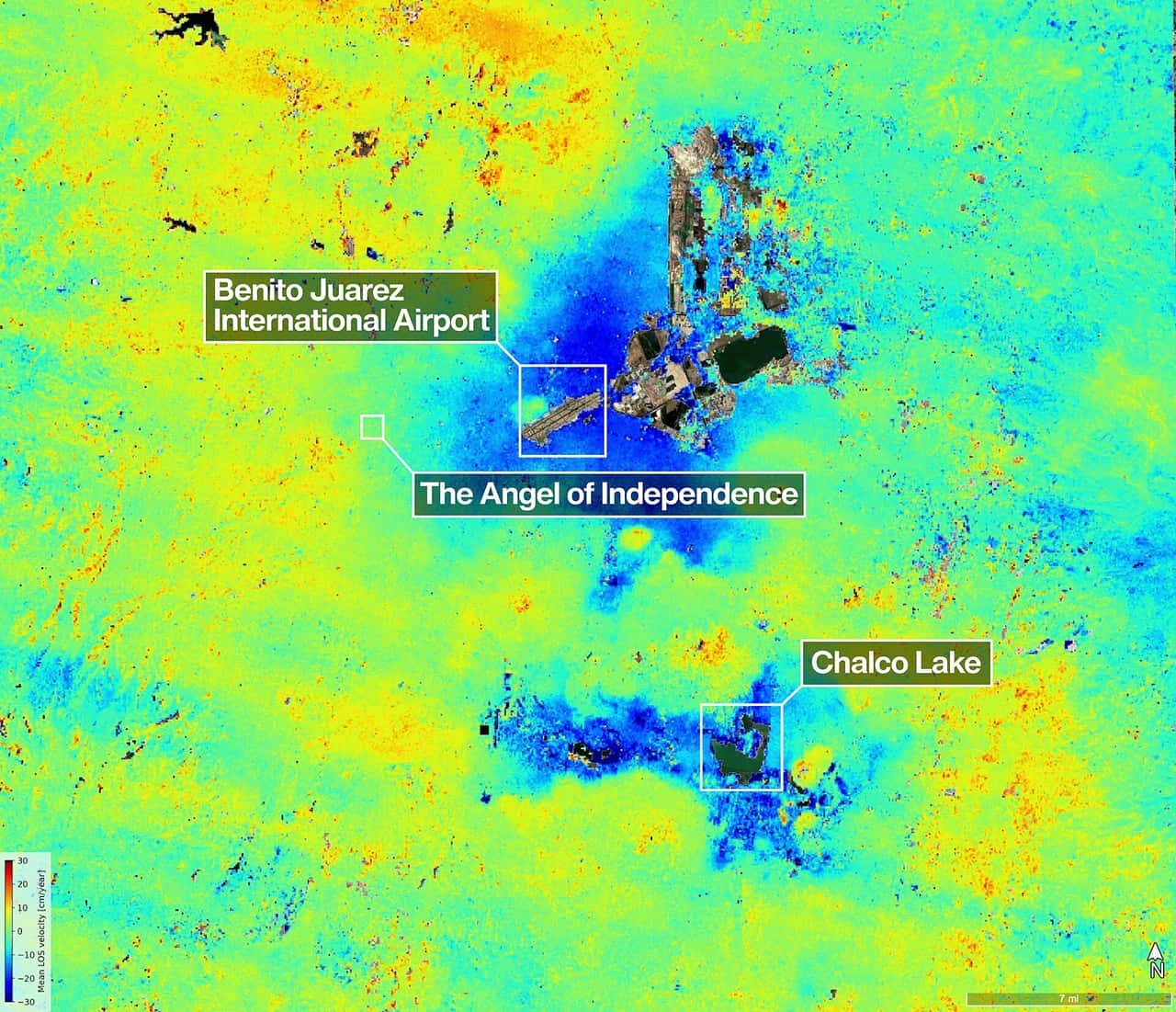
A study in Nature Cities used satellite radar data from 2014 to 2023 to map land subsidence in 465 cities of more than a million people in 107 countries, and found sinking most severe in Southeast Asia, West and Central Asia and North America, according to the paper's abstract and a Nature Portfolio press release. Parts of Mexico City recorded the fastest localized sinking, about 217 millimeters a year, against a citywide median of 8 millimeters, and Medan, Indonesia had the highest citywide median rate, about 33 millimeters a year, the release said. The study, "A global view of urban land subsidence and its changing trajectories," is by Lijun Wang and colleagues. The authors caution that the study measured relative local subsidence of large cities, may exclude areas beyond administrative boundaries, and is less certain where ground-station coverage is sparse, according to the release. Rates in cities such as New York, Boston, London and Tokyo were generally stable, 0.1 to 1.9 millimeters a year, and the release said these small figures should be read cautiously. Groundwater pumping is usually the biggest driver, Scientific American reported. It quoted coauthor Guoquan Wang of the University of Houston as saying that once it happens, sinking is "cumulative and largely irreversible."