Isophoric News · Tuesday, November 3, 2026
NASA's Swift observatory was expected to re-enter the atmosphere on Wednesday, Nov. 4, after a failed rescue
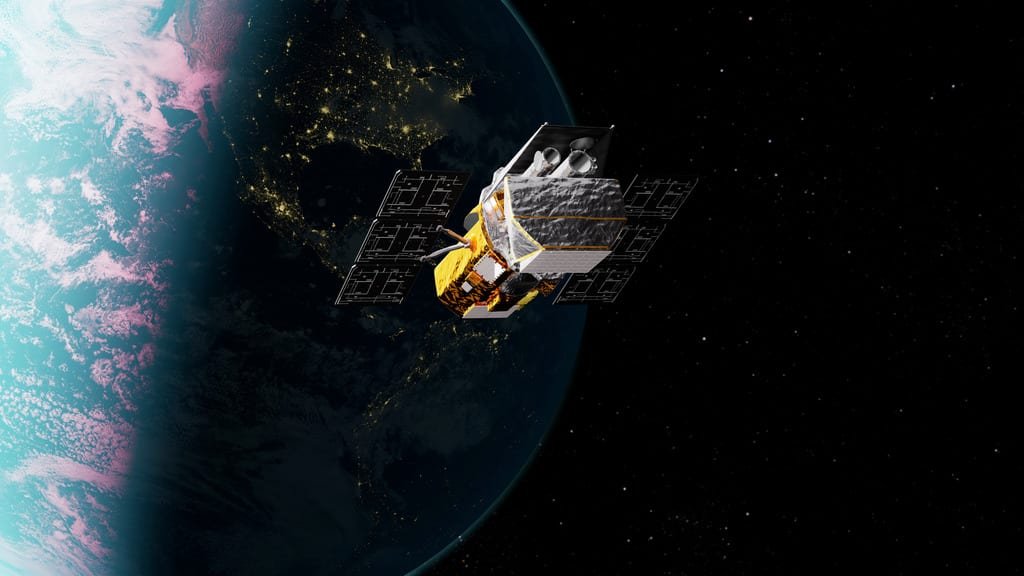
NASA said on Monday, Nov. 2, that its Neil Gehrels Swift Observatory was expected to re-enter Earth's atmosphere on Wednesday, Nov. 4, almost 22 years after launch, with the U.S. Space Force predicting approximately 3:30 a.m. EST and an uncertainty of 11 hours. NASA said it expected most of the roughly 3,200-pound spacecraft to burn up, with some components expected to survive. Because of Swift's low inclination, any surviving fragments are limited to between 20.6 degrees south and 20.6 degrees north latitude, NASA said, and it put the risk of harm to anyone on Earth at approximately 1 in 2,100. Swift launched in 2004 to study gamma-ray bursts and was designed for a two-year prime mission, NASA said. A spacecraft commissioned by NASA to boost Swift to a higher orbit launched in early July, but by late August technical issues made a boost attempt impossible, Science News reported. Space.com reported that an aerospace engineer quoted in its article named the observatory's six reaction wheels, and tougher telescope parts such as lenses and mirrors, as the most likely survivors. NASA said it and the Space Force would continue to monitor the re-entry and update predictions.